
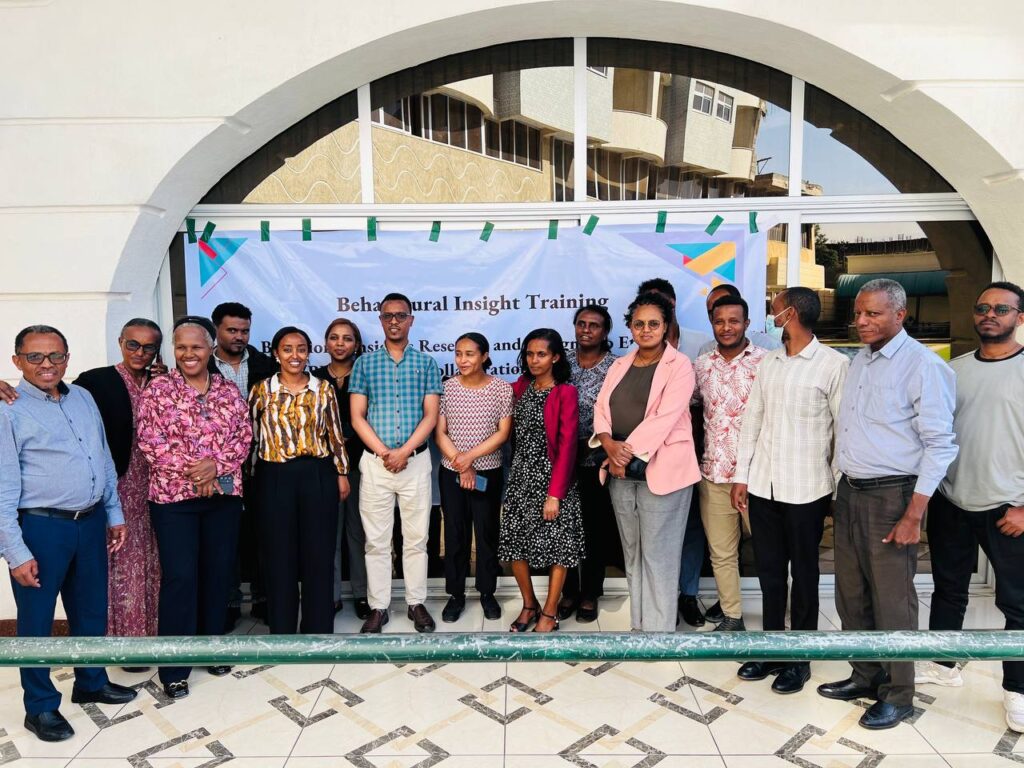
The Behavioral Insights Research and Design Lab (BIRD Lab) at Addis Ababa University, with financial and technical support from UNICEF, has successfully concluded a high-impact, four-day Behavioral Insights (BI) training held from May 12–15, 2026, in Adama.
This landmark training convened a select group of senior technical experts and program leaders from key federal institutions, including the Ministry of Health Ethiopia, Ministry of Education Ethiopia, Ministry of Women and Social Affairs Ethiopia, and Ministry of Labor and Skills Ethiopia. The initiative represents a significant step toward institutionalizing behavioral science within Ethiopia’s public sector systems.
Advancing Behavioral Science for Policy and Practice
The primary objective of the training was to build and strengthen institutional capacity to systematically apply behavioral insights in the design and implementation of policies, programs, and service delivery mechanisms. The training emphasized practical, context-sensitive approaches to addressing complex social and development challenges through behaviorally informed strategies.
Over the four intensive days, participants engaged with foundational and advanced BI concepts, including behavioral diagnosis, cognitive biases, decision-making processes, and ethical considerations in behavioral science. The sessions blended theory with hands-on exercises, case studies, and group work tailored to the Ethiopian context.
Introducing the DEPTH Framework
A central component of the training was the application of the structured DEPTH framework, which guided participants through a step-by-step process of:
- Defining priority behavioral challenges
- Exploring underlying behavioral drivers
- Prototyping contextually appropriate interventions
- Testing solutions using evidence-based methods
- Harnessing results for scale-up and adaptation
Participants demonstrated strong engagement in applying this framework to real-world challenges within their respective sectors.
From Learning to Action: Ministry-Specific Action Plans
A key highlight of the training was the development of actionable Behavioral Insights action plan by each participating ministry. These action plans identified priority behavioral bottlenecks and outlined strategic interventions aligned with sector-specific goals.
On the final day, participants presented their action plans, receiving constructive feedback from facilitators and peers. This collaborative process ensured that the plans were practical, evidence-informed, and ready for implementation.
Sustaining Impact Through Mentorship
The training marks the first phase of a broader, results-oriented capacity strengthening initiative. To ensure sustained application and institutionalization of BI approaches, BIRD Lab will provide a structured three-month mentorship program from May through July 2026.
During this phase, ministries will receive tailored technical support to implement their BI action plans, test interventions in real-world settings, and generate actionable evidence to inform scale-up. Progress will be monitored through regular reporting, coaching sessions, and performance reviews.
Looking Ahead
BIRD Lab remains committed to fostering a culture of evidence-based, human-centered policymaking in Ethiopia. By equipping government institutions with practical behavioral science tools and ongoing support, the Lab is contributing to more effective, responsive, and sustainable development outcomes. The Lab looks forward to continued collaboration with participating ministries and partners, and to sharing lessons learned and success stories from the mentorship phase in the coming months.